Single-Tasking vs Multitasking: The Deep Work Secret

Lesezeit: 8 Minuten
Your brain cannot multitask, no matter how skilled you believe you are. Neuroscientist Dr Earl Miller from MIT confirmed in 2016 that when you attempt to juggle tasks simultaneously, your brain merely switches rapidly between them, losing efficiency with every shift. Single-tasking delivers the cognitive edge that separates high performers from the perpetually busy yet unproductive masses.
Deep work demands undivided attention. This principle applies whether you're closing a six-figure deal, preparing for a high-stakes negotiation, or cultivating the refined presence that attracts successful partners in luxury social circles. The habit of single-tasking transforms ordinary effort into extraordinary results.
The Multitasking Myth That Costs You Hours Daily
Research from Stanford University published in 2009 revealed that chronic multitaskers performed worse than single-taskers across every cognitive measure tested. Professor Clifford Nass discovered that heavy multitaskers struggled to filter irrelevant information and switched tasks more slowly than their focused counterparts.
The switching cost adds up brutally. Each time you toggle between your inbox and a strategic document, your brain requires an average of 23 minutes to regain full focus, according to Gloria Mark's study at the University of California, Irvine. That Instagram notification or quick text reply fragments your concentration and demolishes productivity.
Successful people understand this neurological reality. When Jeff Bezos runs Amazon strategy sessions, he famously bans PowerPoint and demands silent reading time for six-page memos. This single-tasking approach ensures participants absorb complex information without the distraction of animated slides or simultaneous note-taking.
What Your Brain Actually Does When You "Multitask"
Your prefrontal cortex handles goal management and task switching. When you attempt to multitask, this region rapidly alternates attention rather than processing information in parallel. This constant switching floods your brain with stress hormones, elevates cortisol levels, and drains mental energy reserves.
The impact extends beyond immediate productivity. A 2018 study in the Journal of Experimental Psychology found that multitasking during learning sessions reduced participants' ability to recall information by up to 50%. If you're studying market trends or mastering conversational skills for networking with high-value individuals, divided attention guarantees mediocre retention.
Creating Flow States Through Strategic Single-Tasking
Psychologist Mihály Csíkszentmihályi identified flow as the optimal performance state where time disappears and productivity soars. His research spanning three decades proves that flow requires uninterrupted concentration on a single challenging task matched to your skill level.
Cal Newport, author of "Deep Work" published in 2016, documents how single-tasking sessions of 90 to 120 minutes produce disproportionate value. He studied knowledge workers who generated breakthrough results by protecting these focused blocks religiously. Their secret involved treating deep work sessions with the same non-negotiable status as a meeting with your most important client.
Flow states feel effortless once triggered, yet the entry conditions are strict. Environmental distractions must vanish. Digital interruptions require elimination. Your task must demand just enough challenge to engage your full capability without overwhelming your current competence.
The 90-Minute Single-Tasking Protocol
Your ultradian rhythm naturally cycles every 90 to 120 minutes, creating optimal windows for deep work. Structure your most cognitively demanding work within these biological peaks. Investment analyst Josh Waitzkin, eight-time National Chess Champion, blocks 8:00 to 10:00 each morning for single-tasking sessions that generate his highest-quality strategic analysis.
Before each session, define one specific outcome. Vague intentions like "work on proposal" fail. Precise goals like "complete financial projections for slides 8 through 12" create measurable targets that maintain focus throughout the session.
Distraction Control Methods That Actually Work
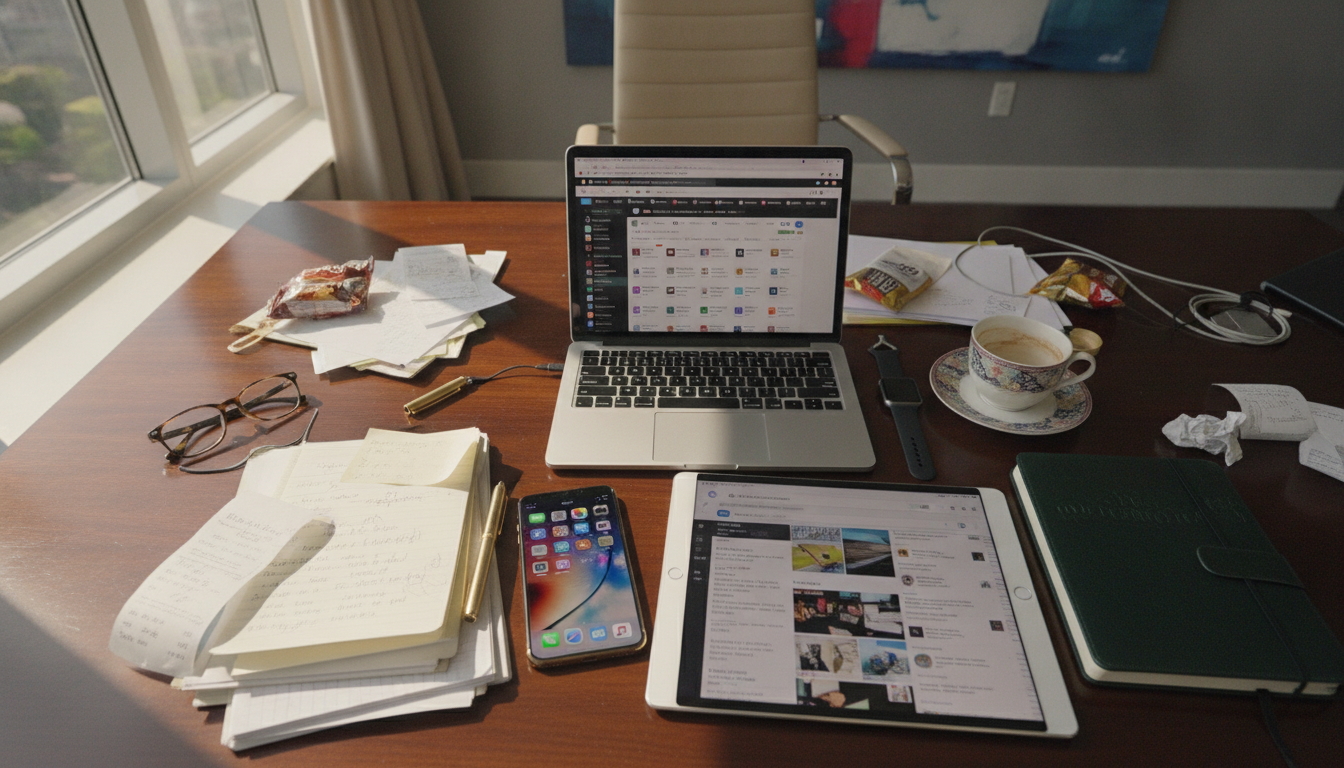
Eliminating distractions requires aggressive boundary-setting. Successful entrepreneurs like those who master time-blocking systems treat their deep work sessions as sacred. They reject the myth of constant availability that traps average performers in reactive mediocrity.
Digital distractions pose the greatest threat to single-tasking. Freedom and Cold Turkey are software applications that block tempting websites and apps during designated focus periods. Research from the University of Texas at Austin in 2017 found that merely having your smartphone visible on your desk, even powered off, reduces available cognitive capacity.
Physical environment engineering matters equally. A 2011 study in the Journal of Neuroscience showed that visual clutter competes for neural resources and diminishes focus. Clear your workspace completely before deep work sessions, leaving only items directly relevant to your single task.
The Notification Detox Challenge
Disable every non-essential notification on your devices. Email deserves scheduled check-ins twice daily, not constant monitoring. Slack messages can wait 90 minutes. The world will not collapse if you become temporarily unreachable while producing your best work.
For luxury lifestyle professionals and those navigating elite social circles, this boundary-setting demonstrates high value. Successful individuals control their time rather than surrendering it to every ping and buzz. This selective availability actually increases your perceived status and desirability.
Single-Tasking Habits of Documented High Achievers
Author J.K. Rowling checked into the Balmoral Hotel in Edinburgh in January 2007 to complete the final Harry Potter manuscript. She deliberately isolated herself from family distractions, focusing single-mindedly on writing for extended daily sessions. This strategic retreat enabled her to finish the 784-page novel in complete flow.
Microsoft founder Bill Gates takes "Think Weeks" twice annually, retreating to a secluded cabin with no internet access. He spends seven days reading papers and books without interruption, engaging in pure single-tasking that generates breakthrough strategic insights for his philanthropic work.
These examples share a common pattern. High performers protect their attention as their most valuable asset. They understand that scattered focus produces scattered results, whilst concentrated single-tasking generates disproportionate value.
The Morning Single-Task Advantage
Tackle your most important single task immediately upon waking, before email or news consumption contaminates your mental clarity. Your willpower and decision-making capacity peak in the morning, making this the ideal window for challenging deep work that demands full cognitive resources.
This approach aligns with mental focus optimization strategies that elite performers employ. Your brain operates on finite daily energy reserves. Spending morning hours on reactive tasks like email wastes your peak cognitive state on low-value activities.
Measuring Your Single-Tasking Progress
Track your deep work hours weekly using a simple spreadsheet or app like Toggl. Aim for 15 to 20 hours of single-tasking sessions per week, divided into focused blocks. This metric reveals whether you're genuinely prioritising concentrated work or merely staying busy.
Quality matters as much as quantity. After each 90-minute session, rate your focus level from 1 to 10. Consistent scores below 7 signal environmental issues, unclear goals, or tasks mismatched to your skill level. Adjust your approach based on honest self-assessment.
Review your weekly output versus input. Did your 15 hours of single-tasking produce tangible results? Completed projects, strategic breakthroughs, and measurable progress validate your approach. Busy work disguised as focus requires ruthless elimination.
Essential Single-Tasking Principles

- Eliminate all digital notifications during 90-minute deep work blocks, treating your focus time as non-negotiable and protecting it with the same commitment as crucial client meetings
- Define one specific outcome before each single-tasking session, ensuring your goal is measurable and achievable within your allocated timeframe to maintain motivation and direction
- Schedule your most cognitively demanding work during morning hours when willpower and mental clarity peak, reserving afternoons for collaborative tasks and communication that require less intensive focus
- Remove visual clutter completely from your workspace, leaving only materials directly relevant to your current task to prevent neural competition for attention resources
- Track your weekly deep work hours and focus quality ratings to identify patterns, optimize your environment, and ensure genuine productivity rather than superficial busyness
Frequently Asked Questions
What distinguishes single-tasking from simply working slowly?
Single-tasking involves complete attention on one task until completion or a natural break point, maximising cognitive efficiency. Working slowly can still involve fragmented attention and frequent task-switching. The Stanford study showed single-taskers actually complete work faster overall because they avoid the 23-minute refocusing penalty that task-switching creates.
How do successful people handle urgent interruptions during deep work?
Elite performers distinguish between truly urgent matters requiring immediate response and false urgency created by poor planning. They communicate their deep work schedule to colleagues and establish clear criteria for interruption-worthy emergencies. Most "urgent" requests can wait 90 minutes without consequence, and training others to respect your focus time actually increases your professional value.
Why does single-tasking feel unnatural at first?
Your brain has been conditioned by years of digital distraction and dopamine hits from task-switching. The University of California research shows breaking this habit requires approximately three weeks of consistent practice. Initial discomfort signals your brain rewiring itself for sustained attention, similar to muscle soreness after resuming exercise following a long break.
What single-tasking duration works best for complex projects?
Align with your natural ultradian rhythm of 90 to 120 minutes for optimal results. Josh Waitzkin's research on elite performance confirms this duration balances deep engagement with biological rest needs. Sessions shorter than 60 minutes rarely achieve flow state, whilst extending beyond 120 minutes without breaks triggers declining returns and mental fatigue.
How can single-tasking improve performance in luxury social settings?
Complete presence during conversations signals high value and genuine interest, distinguishing you from distracted individuals constantly checking devices. When you give someone your undivided attention at an exclusive event or intimate dinner, you create memorable connections that superficial multitaskers never achieve. This focused engagement builds the authentic relationships that define success in elite circles.
Master Your Attention, Transform Your Results
Single-tasking separates performers who achieve extraordinary outcomes from those trapped in reactive mediocrity. Your ability to focus completely on one task determines whether you close transformative deals, master valuable skills, or cultivate the presence that commands respect in any room.
The science proves multitasking is a neurological impossibility that fragments your effectiveness. Deep work through single-tasking creates the flow states where breakthrough performance lives. Start tomorrow morning with one 90-minute session on your most important task. Protect this time ruthlessly, measure your progress honestly, and watch your results compound.
Your attention is your most valuable asset in a world designed to fragment it. Take control now through deliberate single-tasking, and join the ranks of high achievers who understand that depth beats breadth every time. The choice between scattered busyness and focused excellence starts with your next 90 minutes.