Wine Etiquette: Navigate Fine Dining with Confidence
Lesezeit: 9 Minuten
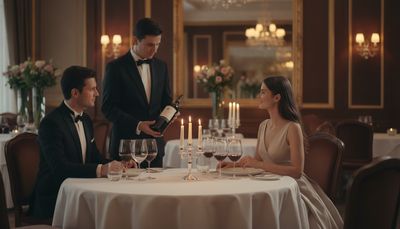
You're seated at a Michelin-starred table, the sommelier approaches with a leather-bound list, and suddenly your palms sweat. Wine etiquette isn't about snobbery—it's about confidence, comfort, and showing respect for craft. Whether you're on a first date at Sketch or closing a business deal at The Ledbury, knowing the unspoken rules transforms anxiety into presence.
Mastering wine etiquette opens doors beyond the dining room. It signals cultural fluency and attention to detail—qualities that matter in professional circles and upscale social settings alike. This guide walks you through every step, from selection to tasting, so you command the moment rather than fumble through it.
Why Wine Etiquette Matters in High-End Settings
Fine dining etiquette reflects broader social competence. According to a 2019 survey by Wine Intelligence, 62% of UK fine-dining patrons feel uncertain when ordering wine, yet almost none admit it at the table. That gap between knowledge and confidence costs opportunities—romantic, professional, and personal.
In luxury venues, staff observe how you handle the ritual. Do you defer entirely to your guest? Do you dismiss the sommelier? Both extremes send signals. Competent wine etiqueta demonstrates you understand context, respect expertise, and navigate high-stakes environments with ease. Much like confident body language, wine knowledge becomes a subtle asset in social capital.
Understanding the Wine List: Selection Without Stress
Wine lists at top-tier restaurants can span 40 pages. Don't panic. Start by scanning the structure—most separate by region (Burgundy, Bordeaux, Tuscany), varietal (Chardonnay, Pinot Noir), or style (sparkling, full-bodied red).
If budget matters, identify your price range early. Many lists place mid-tier bottles in the second or third cheapest slots to avoid the "cheapest wine" stigma. A 2021 study from Cornell University's School of Hotel Administration found diners gravitate toward the second-lowest-priced option 40% of the time, a pattern restaurants exploit by positioning high-margin wines there.
Ask for guidance without embarrassment. Frame your request around food pairing: "We're having the turbot and the venison—what would you suggest?" This invites the sommelier's expertise without admitting ignorance. Professional sommeliers at venues like The Ritz or Claridge's trained for years; their job is to enhance your experience, not judge your knowledge.
Decoding Wine Terminology Quickly
You don't need a WSET diploma to sound informed. Learn six descriptors that cover most situations: crisp (high acidity, refreshing), oaky (barrel-aged, vanilla notes), tannic (drying sensation, common in reds), fruit-forward (prominent berry or citrus), mineral (flinty, saline), and full-bodied (rich, weighty).
Use these when describing preferences: "I enjoy crisp whites with seafood" or "I prefer fruit-forward reds without heavy tannins." This vocabulary signals you've thought about wine beyond sweet versus dry, and it helps the sommelier narrow recommendations efficiently.
Sommelier Interaction: Building Rapport, Not Barriers
Sommeliers are allies, not adversaries. The best interactions resemble collaboration. When the sommelier presents the bottle, glance at the label to confirm it matches your order—vintage, producer, region. This isn't about distrust; labels occasionally get mixed in busy cellars.
If you ordered a 2018 Châteauneuf-du-Pape and a 2017 appears, mention it politely: "I believe we ordered the 2018—is this the correct vintage?" The sommelier will either correct the error or explain a substitution.
Never wave away the tasting ritual. Even if you know little about wine, the protocol exists for quality control—cork taint affects roughly 2-3% of bottles sealed with natural cork, according to the Australian Wine Research Institute. When the sommelier pours a small sample, swirl gently, smell, then sip. You're checking for faults (musty odours, vinegar sharpness), not deciding if you "like" the wine. If it smells clean and tastes balanced, nod and say, "That's lovely, thank you."
What to Say When Sommelier Presents Wine
Keep it simple. After tasting, respond with one of these three phrases:
- "Perfect, thank you"—the standard approval
- "This seems a bit off—could we try another bottle?"—if you suspect a fault
- "I'm not familiar with this producer—can you tell me more?"—if curious and wanting to learn
Avoid over-explaining or apologising for limited knowledge. Confidence paired with curiosity earns more respect than pretending expertise you lack. Much like reframing failure as learning, treat wine interactions as skill-building, not tests to pass.
The Tasting Ritual: Step-by-Step Wine Etiquette Rules
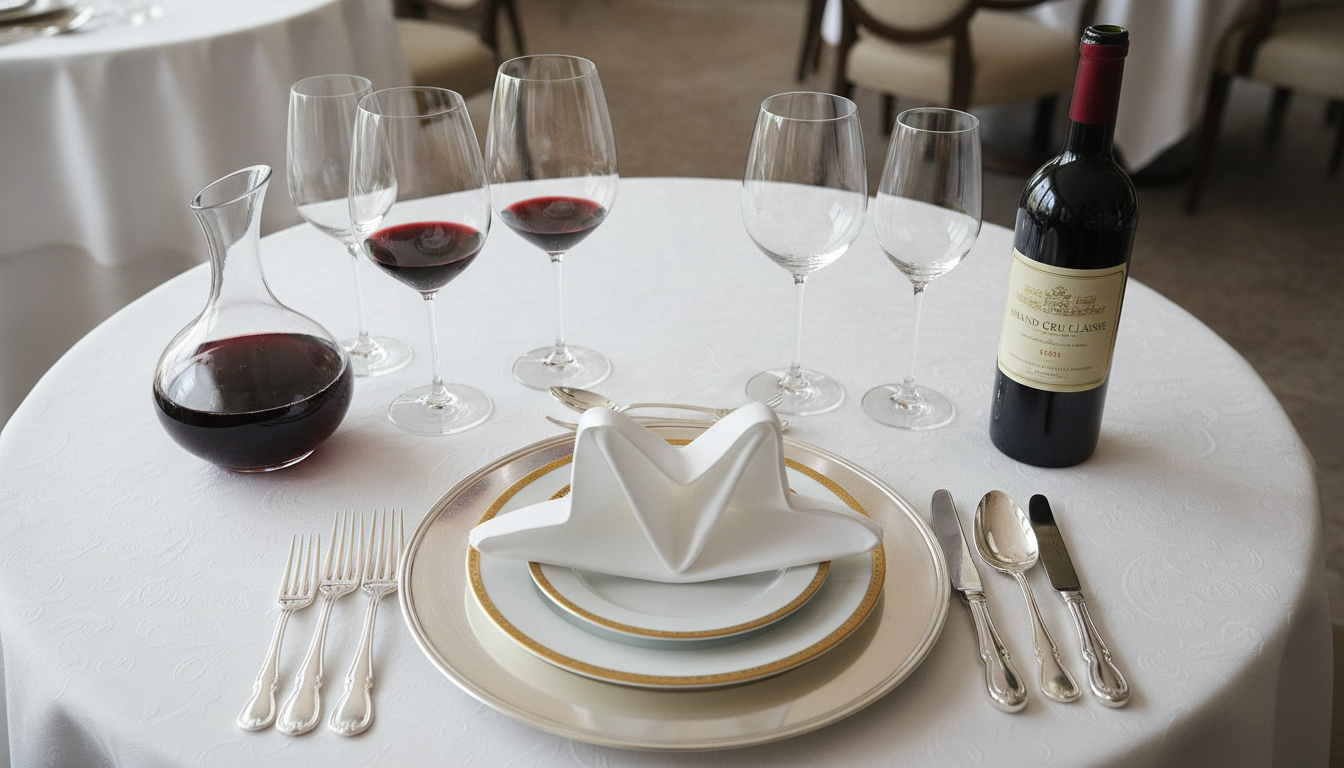
Once approved, the sommelier pours for the table—guests first, host last. Never reach for the bottle to refill glasses yourself unless dining casually with close friends. At formal tables, staff manage pours. If wine runs low and no server hovers, make eye contact and lift the bottle slightly—they'll notice.
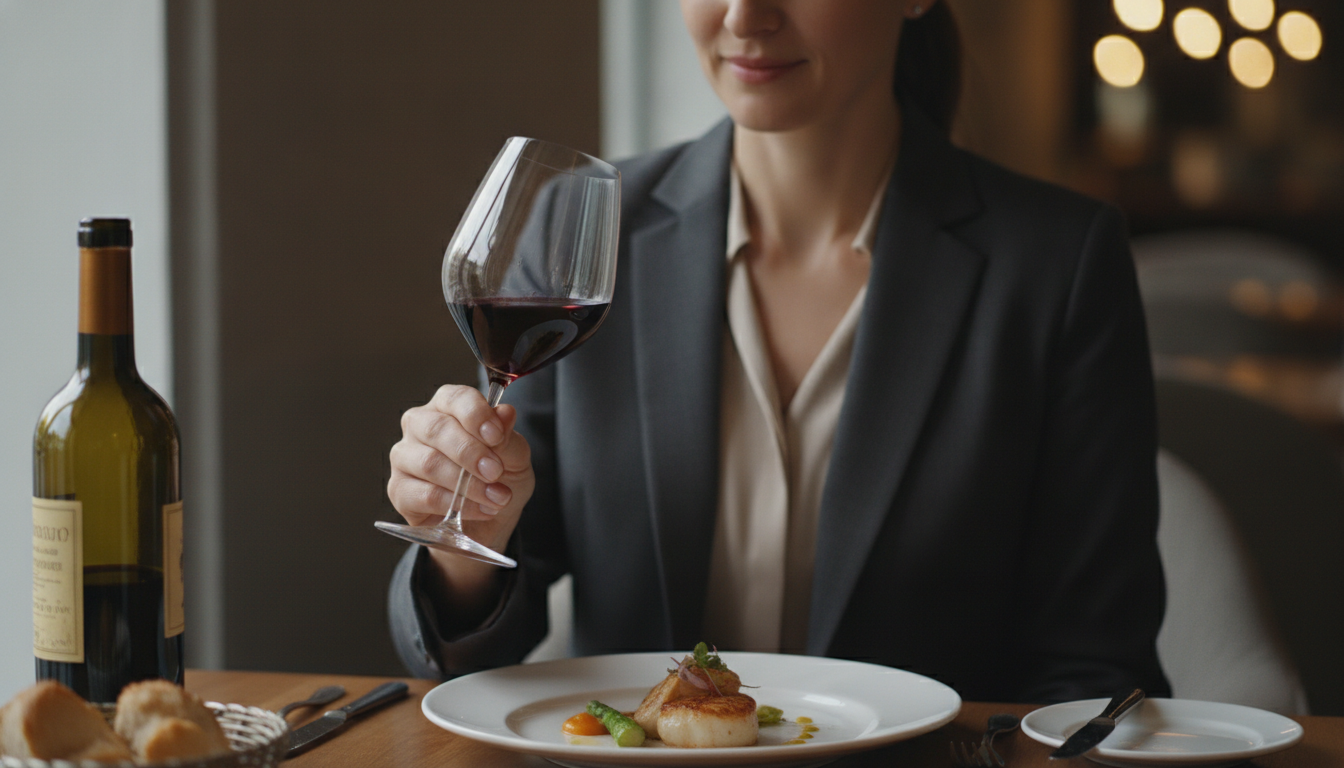
Hold your glass by the stem, not the bowl. Body heat warms wine quickly, and fingerprints on crystal look careless. Swirl gently before sipping to release aromatics—this isn't theatre; it's chemistry. Volatile compounds that carry flavour need oxygen exposure.
When toasting, lift your glass without clinking in fine-dining settings. Clinking risks chipping delicate crystal and reads as casual pub behaviour. Make eye contact, raise your glass to shoulder height, then sip. This subtlety distinguishes upscale etiquette from everyday socialising.
Pacing and Pairing Across Courses
If you've ordered a tasting menu, the restaurant may suggest wine pairings—half-glasses matched to each course. This option removes guesswork and ensures harmony between food and wine. Expect to pay £50-£120 for pairing flights at Michelin-level venues, depending on selections.
If ordering by the bottle, choose wines that complement the majority of dishes. A versatile Burgundy Pinot Noir works with fish, poultry, and lighter meats. A crisp Chablis pairs beautifully with shellfish and salads. Avoid ordering Cabernet Sauvignon if half the table orders fish—heavy tannins clash with delicate seafood.
Common Wine Etiquette Mistakes to Avoid
Even seasoned diners slip up. Here are the pitfalls that undermine your polish:
First, never smell the cork. When the sommelier places it beside you, it's a formality, not an invitation to sniff. Cork scent reveals nothing reliable about the wine inside. Simply leave it on the table.
Second, don't send back wine because you dislike the style. If you ordered an oaky Chardonnay and realised you prefer unoaked, that's your error, not a flaw. Restaurants only accept returns for genuine faults—cork taint, oxidation, or wrong bottle.
Third, avoid filling glasses to the brim. Wine needs room to breathe. Pour to the widest part of the bowl—roughly one-third full for reds, half for whites. Overfilling looks amateurish and prevents proper aeration.
Handling Wine Spills and Service Errors Gracefully
Accidents happen. If you spill, dab—don't rub—with your napkin, then discreetly signal a server. Never make a scene or apologise profusely. Poise under pressure speaks louder than perfection.
If the sommelier makes an error—wrong vintage, incorrect temperature—address it quietly and directly. "I think this may be the 2016 rather than the 2018 we ordered" suffices. Staff appreciate discrete corrections over loud complaints that disrupt other diners.
Wine Etiquette in Different Dining Contexts
Rules flex depending on setting. At a relaxed brasserie, clinking glasses and casual pours feel appropriate. At The Waterside Inn or Restaurant Gordon Ramsay, formality increases—servers handle every pour, and silence during tasting is expected.
When hosting, you taste first to approve the bottle. When guesting, wait for your host to signal the first sip. If dining as a couple and one person ordered wine, the sommelier typically offers the tasting pour to whoever ordered, regardless of gender. Modern wine etiquette has shed outdated gender norms—competence and interest matter, not who sits where.
In business settings, match your wine knowledge to the context. If your client or senior colleague demonstrates expertise, listen more than you speak. If they defer to you, share recommendations confidently but without lecturing. Wine becomes a bridge, not a barrier, when you read the room and adapt.
Building Wine Knowledge Over Time
Confidence grows through exposure, not memorisation. Attend tastings at Hedonism Wines in Mayfair or Berry Bros. & Rudd on St James's Street—both offer beginner-friendly sessions where you taste without judgment. Many high-end platforms, including MySugardaddy, host lifestyle events that include wine education, pairing social learning with networking opportunities.
Read wine critics like Jancis Robinson or Decanter magazine to familiarise yourself with terminology and trends. But remember: personal preference trumps scores. A 95-point Bordeaux means nothing if you dislike bold, tannic reds.
Track what you enjoy using a notes app. After each meal, jot down the wine, your thoughts, and the pairing. Over six months, patterns emerge—you'll notice you favour Loire Valley whites or prefer Italian over Spanish reds. This self-awareness makes future selections faster and more satisfying, much like spaced repetition builds long-term knowledge retention.
Frequently Asked Questions About Wine Etiquette
Who should taste the wine at a restaurant?
The person who ordered the wine tastes first, regardless of who is hosting or gender. If ordering for the table, the host typically tastes. The purpose is quality control, not a final decision on preference.
What if I don't like the wine after tasting?
You can only send back wine with a genuine fault—cork taint, oxidation, or incorrect bottle. Disliking a style you ordered is not grounds for return. If uncertain, ask the sommelier for their opinion before deciding.
Should I decant wine at a restaurant?
Decanting happens mainly for older reds with sediment or young, tannic wines needing aeration. The sommelier will suggest decanting if appropriate. If you want it and they don't offer, simply ask: "Would you recommend decanting this Barolo?"
How much should I tip the sommelier separately?
In the UK, tipping often covers all service. If a sommelier provided exceptional guidance, an additional £10-£20 in cash directly to them is a gracious gesture, though not mandatory. Base it on the overall wine spend and level of personalisation.
Is it rude to ask for ice in wine?
Requesting ice dilutes and chills wine beyond ideal serving temperature, which most fine-dining venues avoid. If white wine arrives too warm, politely ask for an ice bucket rather than ice cubes. This cools the bottle without compromising flavour.
Conclusion: Confidence Through Practice, Not Perfection
Wine etiquette isn't a test you pass or fail—it's a skill you refine with each meal. From understanding restaurant wine selection to mastering sommelier interaction, every element builds confidence that extends beyond the table. You'll navigate social and professional settings with the same ease you order a Premier Cru Chablis.
Start small. Next time you dine somewhere special, engage the sommelier with a single question about pairing. Notice how your comfort grows when you approach wine as collaboration, not examination. The rituals exist to enhance your experience, not intimidate you.
Book a table, ask questions, taste widely, and trust your palate. Wine etiquette becomes second nature when you practice it as you would any other habit—with curiosity, consistency, and the understanding that every expert once started as a beginner.